
Accessibility Technologies That Benefit Everyone
Arslan Azeem
December 14, 2025
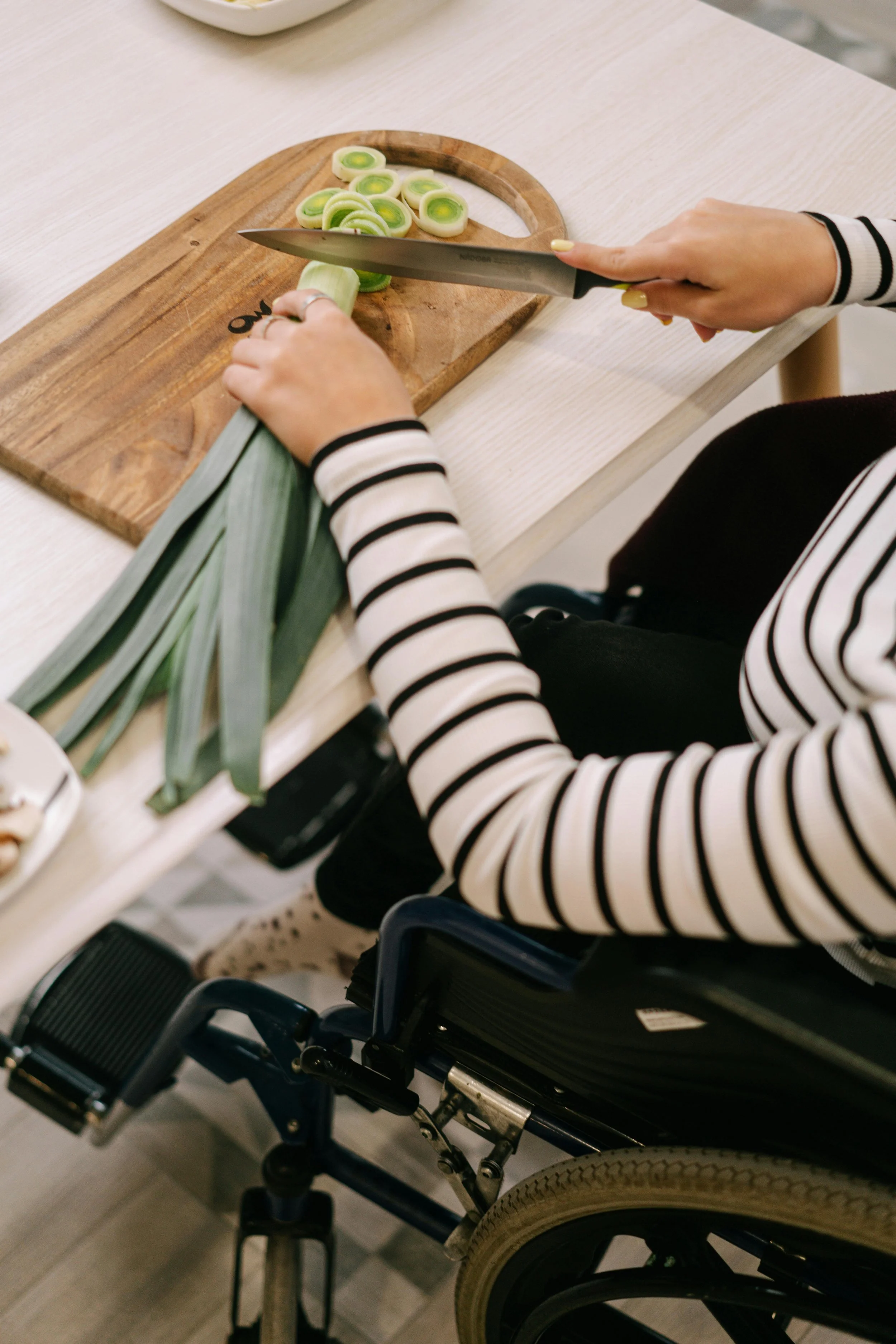
Accessibility is often misunderstood as a niche concept whereby products and services are designed for people with disabilities. In reality, accessibility technologies and design choices consistently improve daily life or solve real problems for everyone. One of the clearest ways to understand this is through the “curb cut effect” that takes its name from curb cuts, which is the part of the sidewalk that dips down to reach the height of the adjacent road, acting as a ramp (Blackwell, 2017). Originally designed to be inclusive to people in wheelchairs, this concept quickly proved useful to parents pushing strollers, travellers with wheeled baggage, cyclists, elderly people, delivery workers, and people using scooters and roller skates. Today, the curb cut effect is visible across our built environment, from outdoor public spaces to within the kitchen in your home.
Automatic doors and push-to-open buttons are another example of the curb cut effect. Partially mandated by cities for individuals with limited strength, dexterity, and mobility, they improve building flow, reduce physical strain, and enhance hygiene across hospitals, schools, and transit hubs. They also assist in situations where people carry objects or baggage, such as grocery stores and hotels. A less obvious example of the curb cut effect includes clear signage that meets accessibility requirements with large text, strong contrasting colors, useful imagery, and visibility in the dark. These design choices aid tourists who are unfamiliar with the local language, people navigating unfamiliar or disorienting spaces, and anyone having to move quickly through a crowded environment.
When a product or service is designed to meet the needs of everyone to the greatest extent possible, it is referred to as universal design (Story, 1998). An environment where universal design is most impactful is within the home, particularly kitchen and home appliances. For example, lever-style door handles partially gained prominence due to the fact that not everyone can easily grip a round knob. Today, they are widely appreciated by people who cook with messy hands and carrying ingredients or dishes. Modern appliances show the same pattern. There are ADA (Americans with Disabilities Act) compliant dishwashers, including ones that allow all users to lift up the bottom rack to avoid having to bend over (Gebhart, 2016). Touch controls with clear feedback, audible alerts paired with visual indicators, and induction cooktops that stay cool to the touch are all found at the intersection of universal design and safety thinking. These features reduce accidents, expedite tasks, and make products easier to use across different ages and ability levels.
What ties all of the above examples together is the insight that human ability is not fixed. Even if someone does not legally have a disability, we are all able to experience temporary injuries, fatigue, stress, aging, and situational limitations that keep our hands full. Accessibility and universal technologies don’t just accommodate people with disabilities, but also real life.
References
Blackwell, A. G. (2017). The Curb-Cut Effect. Stanford Social Innovation Review. https://doi.org/10.48558/yvms-cc96
Gebhart, A. (2016). Electrolux dishwasher actually helps you unload the dishes. CNET. https://www.cnet.com/reviews/aeg-comfortlift-dishwasher-preview/
Story, M. F. (1998). Maximizing Usability: The Principles of Universal Design. Assistive Technology, 10(1). https://doi.org/10.1080/10400435.1998.10131955